AI4S Insight | Photocatalysis Discovery: Overcoming Bottlenecks in High-Throughput Experiments and Structured Data under Inert Atmosphere
Photocatalysis is at the forefront of AI4S-driven materials discovery, encompassing areas like CO₂ reduction, photocatalytic hydrogen evolution, and photocatalytic organic synthesis. This broad field presents various R&D challenges. Common issues across most subfields include ensuring comparable illumination conditions, structuring data, and increasing testing throughput. Critically, many advanced photocatalytic systems are highly sensitive to oxygen and water. Their synthesis, photoreaction, and characterization must be conducted under an inert atmosphere within a glovebox, which intensifies these difficulties.
While AI can generate tens of thousands of candidate formulations daily, the pace of material preparation, photoreaction evaluation, and product characterization remains slow, even for photocatalytic systems that can operate under ambient conditions. For workflows requiring an inert atmosphere, researchers must manually prepare solutions, seal reactors, perform irradiation, and collect samples within confined glovebox enclosures while wearing thick gloves. Glove boxes are inherently challenging to automate: their limited space restricts parallelization, and each cycle of opening and closing risks contamination and air exposure. As the industry aims to accelerate photocatalyst discovery using AI4S, photocatalysis generally suffers from lengthy experimental cycles and fragmented data. Furthermore, the "slow synthesis and scattered data" under inert environments exacerbate the bottleneck in providing high-quality training datasets.
I. Real-World Challenges of Photocatalysis under Inert Atmosphere
For classic oxygen- and water-sensitive systems, such as noble/non-noble metal photocatalysts for hydrogen evolution, CO₂ reduction systems, and organic photocatalysis, research and development face six key limitations:
Pain Point #1 : Glove box constraints limit efficiency due to space limitations.
The requirement for an inert atmosphere means all operations involving air-sensitive materials must be performed inside glove boxes. The limited internal space makes it difficult to incorporate conventional automated equipment. Researchers, wearing thick rubber gloves, must manually weigh materials, pipette liquids, screw reaction vials, and seal reactors. This significantly extends the time required for material preparation for each experimental set and readily introduces human errors. More critically, transferring equipment between glove boxes or retrieving it requires opening and closing the antechamber, which disrupts the workflow and risks reintroducing oxygen and moisture.
Pain Point 2: Inconsistent illumination conditions hinder result reproducibility.
Photocatalysis is highly sensitive to light source wavelength, irradiation intensity, and optical path distance. In manual experiments, factors like lamp aging, variations in vial placement and light transmittance, and interference from ambient stray light lead to inconsistent product distributions across batches, even for identical formulations. Without precise control over wavelength coverage, it's impossible to systematically distinguish between UV and visible-light response regimes, leaving experimental designs without comparable baselines.
Pain Point 3: Low efficiency of single-channel serial testing.
The formulation space for photocatalysis involves multiple variables, including the catalyst, sacrificial agent, co-catalyst, substrate concentration, pH, wavelength, irradiation duration, and temperature, representing a classic high-dimensional problem. Traditional manual workflows test only one set of conditions at a time, and glove box operations are considerably slower than bench-top work under ambient conditions. Faced with such a vast search space, researchers can only rely on empirical approaches, often overlooking many potentially optimal regions.
Pain Point 4: Sampling disrupts oxygen exclusion and makes preserving intermediate states difficult.
Intermediates and products synthesized under an inert atmosphere risk oxidation or hydrolysis once removed from the glove box. Manual sampling for testing compromises the oxygen-free environment, affecting sample authenticity and interrupting process data acquisition. Researchers often obtain only isolated end-point results, making it impossible to track phase transitions and intermediate species during reaction evolution.
Pain point 5: Mismatched coupling of temperature and photothermal Effects.
Photochemical reactions often exhibit pronounced photothermal effects, causing the temperature within the reaction zone to rise under irradiation. Many systems are temperature-sensitive and require operation within a controlled temperature range. Manual workflows struggle to maintain precise temperature control during continuous illumination. This loss of control over temperature, a critical variable, further compromises data comparability and modelability.
Pain point 6: Fragmented data results in insufficient AI training data.
Reaction parameters such as wavelength, intensity, concentration, temperature, and time are scattered across paper logs and digital notes with inconsistent data formats and a lack of standardized labels for process context. Such sparse, discrete, and incomparable data fails to meet the basic requirements for AI modeling. The so-called "data famine" under an inert atmosphere is essentially not a lack of total data volume, but a systemic shortage of structured data ready for direct AI access.
II. Scientific Insight: Nanoliter Droplet & Inline Detection to Establish a New Baseline for High-Throughput Screening Data
 Figure 1 | Reaction volumes are reduced to the picomolar scale for parallel generation of drug-relevant compound libraries via nanoliter droplets. Individual droplets are analyzed in real time by on-line ESI mass spectrometry at an acquisition rate of 0.3 samples/s, enabling direct high-throughput data acquisition.
A paper titled A droplet microfluidic platform for high-throughput photochemical reaction discovery, published in the top academic journal Nature Communications, highlights that scaling up batch tube reactions from the lab discovery stage directly into continuous-flow systems imposes significant time and resource constraints. The solution lies in miniaturization and on-line analysis. When reaction volumes are reduced to the picomolar scale and each nanoliter droplet is assigned a traceable analytical fingerprint via on-line ESI-MS, scattered data is consolidated into structured data streams. This demonstrates that conventional scale-up workflows suffer from low efficiency and fragmented data that cannot be leveraged by AI. Therefore, the key issue is not insufficient data volume, but the lack of structure and comparability among datasets.
This study reinforces a core conclusion we have repeatedly emphasized: what often restricts AI modeling is not the total number of experiments, but the absence of data pedigree. The microfluidic droplet approach offers a proof-of-concept at the laboratory scale. However, it still has practical limitations when applied to numerous light-sensitive photocatalytic materials, and engineered equipment is required to provide an alternative viable route.
III. System-Level Solution: High-Throughput Photochemical Synthesis Platform under Inert Condition
To address these challenges, Ou Shisheng offers a systematic solution based on a "dual glove box + high-throughput parallelization" architecture. Using the platform delivered to a leading Chinese university as an example, its core design can be summarized in six key points: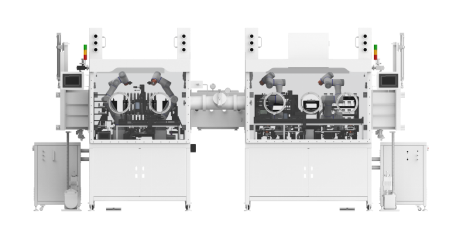
Figure 2 High-Throughput Photochemical Synthesis Platform under Inert Condition
Series Dual Glove boxes with Native Inert Atmosphere Integration
The system utilizes a series dual glove box architecture, allowing end-to-end workflows—including liquid preparation, reaction, and sampling—to operate continuously under an inert atmosphere. This frees researchers from repeated chamber transfers, fundamentally eliminating the risks of oxygen/moisture exposure and workflow interruptions caused by cross-chamber material movement.
4-Axis Robotic Arm and 4 Independently Operated Channels for Parallelization to Overcome Spatial Bottlenecks
A 4-axis robotic arm handles automatic sample loading, vial lid opening/closing, and liquid management. The four channels operate independently, transforming the conventional single-channel manual workflow into parallel, high-throughput screening. This makes "batch experimentation inside glove boxes" a practical, operable process rather than just a concept.
Adjustable Light Source with Thermal Management for Illumination Standardization
The photochemical reaction zone incorporates adjustable light panels covering the 360–750 nm UV-visible spectrum. Supported by a dedicated light-source heat dissipation design, wavelength and irradiation parameters are precisely executed and consistently maintained in a programmable manner, establishing a hardware baseline for comparability across batches and experiments.
Temperature Control via Integrated Thermal Unit to Mitigate Photothermal Drift
An integrated thermal unit provides temperature control from -20°C to 120°C, enabling photochemical reactions within defined thermal windows. This system suppresses temperature drift caused by photothermal effects and integrates temperature as a modelable process variable.
8 Solvent Lines / 30 Solid Material Positions + Interchangeable Vibration / Magnetic Stirring: Balancing Material Diversity and Mixing Uniformity
The system supports the parallel management of solvent vials in multiple sizes (2/4/10/20 mL, with expandable 50–100 mL options) and solid material hoppers. The reaction zone features interchangeable vibration or magnetic stirring, ensuring both broad material compatibility and homogeneous mixing. This serves as the hardware foundation for multi-dimensional formulation screening.
Full-Process Data Traceability to Prepare Clean Data for AI
Unified scheduling automatically correlates and archives parameters from the liquid preparation, reaction, and sampling units, producing structured and traceable data records. Every photocatalysis dataset enters the database with complete process context.
When each data point, complete with its process pedigree, is fed into the AI model, it gains the essential fuel to advance from "fitting" to "prediction." This establishes the fundamental basis for inert-atmosphere photocatalysis to transition from computation to experimentation and from hypothesis to verification.
IV. Paradigm Shift: From Manual Glove Box Operations to Data-Driven R&D Infrastructure
Photocatalysis research requiring an inert atmosphere has long been caught in the dilemma of "aiming for high throughput while being confined by glove box limitations." By adopting the system concept of tandem dual glove boxes combined with high-throughput parallelization, Ou Shisheng has transformed this highly labor-intensive and error-prone workflow into callable, traceable, and parallelizable intelligent equipment nodes. This represents more than just increased efficiency for a standalone instrument; it is a critical missing link enabling photocatalysis R&D to transition from "experience-driven" to "data-driven." Within this framework, inert-atmosphere operations no longer depend on manual handling by operators but become standardized workflows automatically executed by an integrated system.
As AI4S gains accelerated implementation, pioneering a complete workflow of "oxygen-free synthesis—high-throughput validation—structured data" and transforming the experience-reliant "glove box craftsmanship" into standardized, reproducible, and transferable engineering capabilities is a key breakthrough for the paradigm shift in materials innovation. In this way, Ou Shisheng fulfills its mission of "empowering scientists' aspirations through an intelligent equipment ecosystem." The company strives to integrate every operational step of photocatalyst preparation and validation into a reliable, traceable, and collaborative intelligent equipment system, ultimately delivering verifiable new photocatalytic materials.
Reference:
Sun, A. C., Steyer, D. J., Allen, A. R., Payne, E. M., Kennedy, R. T. & Stephenson, C. R. J. A droplet microfluidic platform for high-throughput photochemical reaction discovery. Nat. Commun. 11, 19926 (2020). DOI: 10.1038/s41467-020-19926-z.