Ou Shisheng · AI4S Insights | Polymer R&D Meets AI4S: Ou Shisheng Bridges the “Data Gap” with Intelligent Agents
Artificial intelligence (AI) is already capable of scanning vast chemical spaces and predicting material properties in a very short time, yet in the experimental phase of polymer research and development, the traditional approach of single-reactor intermittent processing and trial-and-error testing in batches remains the norm. The efficiency gap between computation and experimentation is becoming a key bottleneck in the transition of AI for Materials Science from theoretical research to industrial applications.
The key factor limiting this process is not the algorithm, but the data. Without high-quality, consistent, and large-scale experimental data, even the most advanced models are difficult to implement. Using optical-grade polyimide (PI) film—a key material for flexible foldable displays—as an example, this article explains how Ou Shisheng‘s high-throughput polymerization reaction platform is driving polymer R&D from a “single-reactor intermittent” approach toward a “parallel high-throughput” model.
The Challenges in PI Film R&D: The “Combination Explosion” in Polymer Systems
Take optical-grade polyimide (PI) film as an example: this material serves as the “backbone” of flexible foldable displays and must simultaneously offer high light transmittance, low thermal expansion, and excellent flexibility; failure to meet any one of these criteria could affect the device’s lifespan.
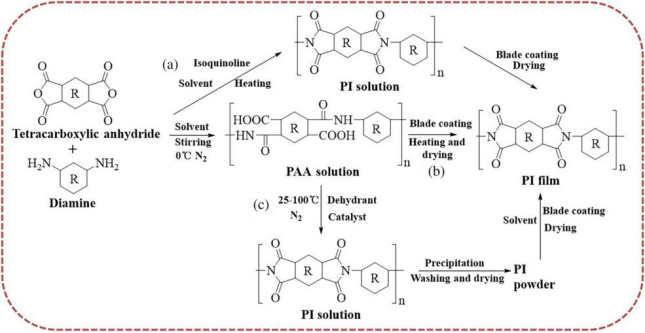
Figure 1 Schematic Diagram of the Synthesis Process for Polyimide (PI) Films
In polymer systems, the molecular weight and its distribution of a polymer are primarily determined by four variables: monomer ratio, catalyst type, reaction temperature, and reaction time. This means that process screening faces a “combinatorial explosion”: if we systematically examine 5 monomer ratios, 3 types of catalysts, 4 temperature gradients, and 5 time points, a single round of preliminary screening alone would require 5 × 3 × 4 × 5 = 300 sets of experiments.
In the traditional single-reactor process, each set of experiments must go through the entire workflow, including weighing, dehydration, polycondensation, sampling, and submission for testing. Assuming each set takes about 2–3 workdays to complete, finishing 300 sets would take approximately 600–900 days—nearly two years. Of even greater concern is the reproducibility of the data: errors in manual sample loading, temperature fluctuations, and sampling contamination can cause deviations of 10–20% in molecular weight between batches; training a model using such data makes it difficult to ensure its reliability.
This is not an isolated phenomenon, but rather a common issue in the research and development of polymer materials.
Common Bottlenecks: The Three Constraints of Traditional Polymer R&D
The inherent characteristics of polymerization systems further exacerbate this contradiction: viscosity increases as the conversion rate rises, limiting mass and heat transfer; the reaction process relies on manual, timed sampling and offline analysis, resulting in significant data lag; and since individual reactors are difficult to operate in parallel, process optimization for a single formulation often takes several days.
At the same time, AI4S is reshaping the R&D paradigm. Companies such as Deep Principles are already able to use generative AI to complete the closed-loop process of “material discovery—property prediction—formulation optimization” in a relatively short period of time; In April 2026, the “Smart Laboratory Development Report,” jointly released by the Jiageng Innovation Laboratory and Huawei, among others, also noted that smart laboratories are driving scientific research from “manual trial and error” toward “intelligent discovery,” and are establishing closed-loop R&D processes focused on complex polymer systems such as polyimides.
While computational capabilities are already in place, experimental capabilities have yet to catch up. The bottleneck stems from three structural constraints inherent in traditional methods:
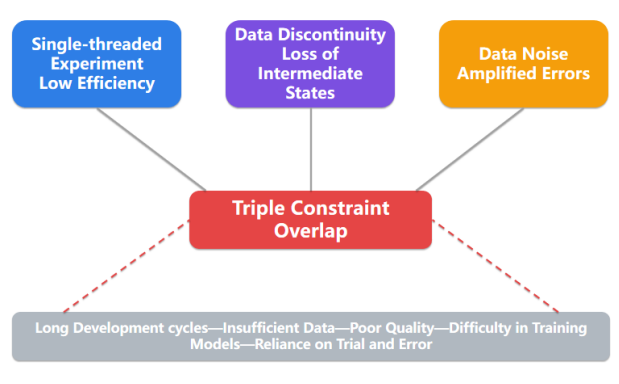
Figure 2 The Three Limitations of Traditional Methods
Single-threaded experiment. A single reactor can only process one set of conditions per run; 300 sets therefore require 300 complete cycles of “weighing—dosing—reaction—sampling—submission for testing.” Researchers spend a great portion of their energy on repetitive tasks rather than on studying reaction mechanisms.
Data discontinuity. There is a disconnect between the reaction and the detection process. Since the reactor is shut down every few hours to collect samples for offline analysis, a great deal of information about the intermediate states of the reaction is lost—it is impossible to determine how the polymerization rate changes, when the distribution broadens, or when the initiator is depleted.
Data noise. Weighing errors, temperature fluctuations, and variations in stirring are amplified step by step during the polymerization reaction. The differences between the two sets of experiments may stem from operational errors rather than the variables themselves; using such data for model training may actually introduce bias.
The combined effect of these three constraints has trapped polymer R&D in a cycle of “long development cycles—insufficient data—poor quality—difficulty in training models—reliance on trial and error.”
A Path to Breakthrough: Restructuring R&D Processes with Modular Automation
Ou Shisheng’s approach is not to make incremental improvements to traditional processes, but to fundamentally restructure the R&D process from the ground up. Taking its automated polymer synthesis platform—delivered to a leading domestic display industry company—as an example, the platform employs a modular architecture that breaks down the entire polymerization process into independently configurable functional units, enabling it to tailor the execution process to the viscosity characteristics of different materials. Controlled centrally by dispatch software and with automated transport via robotic arms, the system achieves a fully closed-loop process from ingredient mixing to product collection. Its core capabilities can be summarized in five points:
- Multi-channel parallel reactions. Supports 8–12 simultaneous reactions, with independent temperature control (RT–150°C) and stirring for each channel, and allows for quantitative addition of reagents during the reaction; a single batch can complete parallel comparisons of multiple sets of conditions, increasing throughput by an order of magnitude compared to a single reactor.
- High-precision automatic batching. Solid dosing accuracy is as high as ±1 mg, and liquid dosing accuracy is ±1–10 μL; the entire process can be protected by nitrogen gas. The dosage for each step is precisely recorded and traceable, eliminating manual dosing errors at the source.
- Inline sampling and automatic pretreatment. Automatically samples (20–200 μL per sample) without interrupting the reaction and performs standardized pretreatment steps—such as evaporation, dilution, and capping—to prevent cross-contamination.
- Inline Gel Permeation Chromatography (GPC) detection. Directly connected to gel permeation chromatography, it provides real-time output of molecular weight, molecular weight distribution, and conversion rate; data is automatically transmitted back and stored in association with the reaction conditions.
- A closed-loop post-processing system covering the entire process. The system operates in a dual-mode configuration combining filtration and centrifugation, automatically completing precipitation, washing, and vacuum drying. It accommodates both low-viscosity and high-viscosity products, and multiple reactions can undergo post-processing simultaneously.
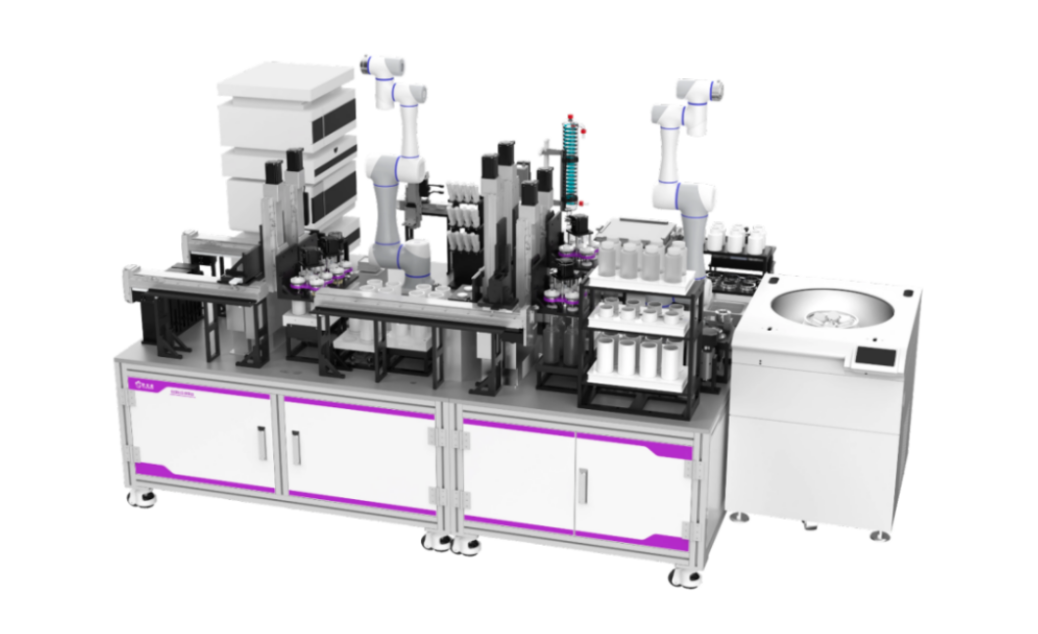
Figure 3 High-Throughput Polymerization Reaction Platform Produced by Ou Shisheng
More importantly, the platform software includes standard interfaces that allow for the integration of additional automated testing equipment as needed. It is not merely a single instrument, but rather a high-throughput R&D production line integrated into the platform. This production line has already been implemented in real-world R&D environments at leading domestic display companies.
From Efficiency to Paradigm: The Threefold Transformation of R&D Models
This architecture has led not only to an increase in the number of experiments, but also to a shift in the R&D model:
Parallel screening to shorten the cycle. 8–12 channels parallel processing means that the throughput per screening run can reach 8–12 times that of a single batch. Taking 300 screening sets as an example, the traditional approach would take nearly two years, whereas a high-throughput platform can reduce the reaction phase to a matter of weeks.
Continuous data, eliminating blind spots. Real-time GPC provides molecular weight data online, allowing researchers to obtain a complete reaction profile rather than isolated endpoint data. This type of process data is far more valuable for modeling than the endpoint data alone provided by traditional methods.
High-quality data that can be used directly for modeling. Through-process automation eliminates human error, ensuring precise and reproducible experimental conditions and significantly improving batch consistency. The resulting data is standardized, structured, and traceable, and can be used directly for model training and validation.
High-Throughput Meets AI4S: From “Data Scarcity” to “Data Availability”
Let's return to the example of PI film. High-throughput mode enables the completion of 8–12 sets of parallel reactions under different conditions in a single batch. Inline GPC tracks changes in molecular weight in real time, and a robotic arm automatically handles the entire transfer process, thereby compressing a full round of system screening from nearly two years to just a few weeks. However, its deeper value lies in the fact that it addresses the most fundamental issue in AI4S materials R&D: “data scarcity.”
As Ou Shisheng mentioned earlier regarding the challenges with data, “Currently, the data sources for AI chemistry databases are primarily published articles and literature, most of which cannot directly guide actual R&D and production. Meanwhile, traditional experimental methods can only generate about 100 data points per year, which is a drop in the bucket for training AI models.”
Ou Shisheng’s high-throughput intelligent agents are the key to bridging this gap. Every set of experimental data on the platform consists of structured, standardized, and traceable high-quality data that can be used directly as input for model training; Once the data is fed back into the model, a closed-loop process is established: “high-throughput parallel experiments → data generation → AI analysis of structure-activity relationships → AI-predicted formulations → validation through the next round of experiments.” This is precisely the key step in moving AI4S from concept to implementation.
Equipping the Polymerization Reactor with a “Data Engine”: The Core of Ou Shisheng’s Mission
Ultimately, a single polymerization platform can only free up researchers in the field of polymer science. Ou Shisheng's true goal is to build an ecosystem of intelligent equipment that replicates this“liberation”across a wider range of R&D scenarios—the H-Flow series compresses hydrogenation reactions from “hours” to “minutes,” the EMC series enables“unmanned”catalyst evaluation at the laboratory stage, and the polymerization platform drives the parallelization of polymer R&D. These are not isolated products; rather, they share the same modular technology and continue to evolve along a common path—from “single-step automation” to “multi-step synthesis” to “high-throughput data”—ultimately coalescing into a reusable, composable R&D infrastructure.
As more and more devices become capable of performing tasks that “humans cannot do well or quickly,” this ecosystem gains a common capability: enabling any laboratory to rapidly set up its own high-throughput platform, freeing scientists from repetitive work, and allowing them to focus on science itself. This is precisely the true meaning of “ Fulfilling the dreams of scientists through an intelligent equipment ecosystem.”